Decreasing Divided Attention in Daily Life: The Impact on Productivity and Cognitive Performance
Understanding Divided Attention
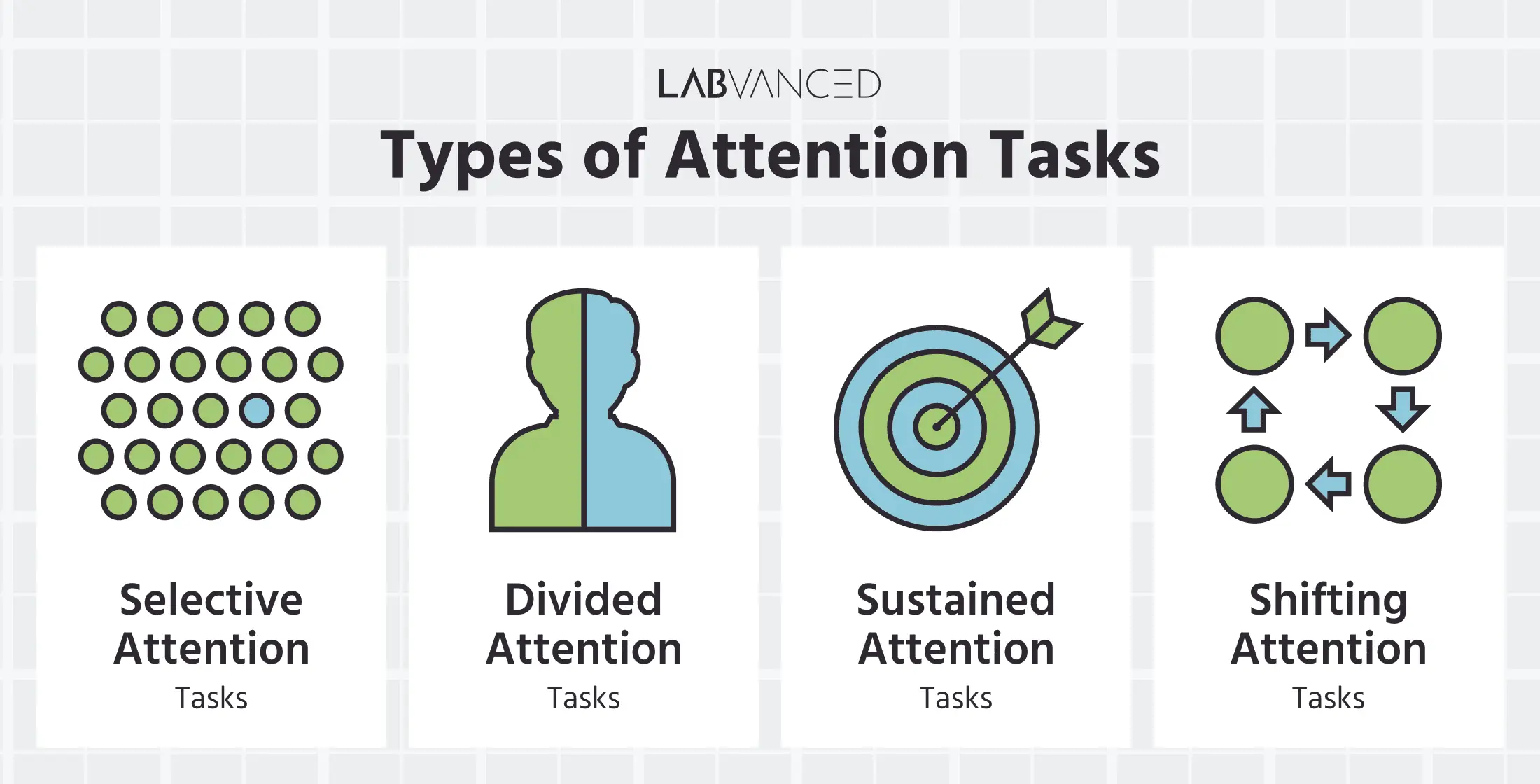
Divided attention is a common phenomenon in today's fast-paced world, where individuals are often required to perform multiple tasks simultaneously. It refers to the ability to allocate mental resources between two or more tasks, such as talking on the phone while cooking or driving, singing in the shower while remembering a to-do list. However, research suggests that divided attention can have a negative impact on productivity and cognitive performance.The Science Behind Divided Attention
Divided attention is a complex cognitive process that involves the allocation of mental resources between multiple tasks. It is mediated by the central executive of the working memory, which is responsible for controlling attentional resources. When we try to perform multiple tasks at once, our brain can only allocate a limited amount of attention to each task, resulting in decreased performance and accuracy.The Impact of Divided Attention on Productivity
Studies have shown that divided attention can significantly impact productivity and performance. When we try to multitask, our brain is not designed to efficiently process multiple tasks at once, resulting in a decrease in productivity and quality of work. For example, a study found that distracted drivers are three times more likely to cause a fatal crash than focused drivers. This highlights the importance of minimizing divided attention in high-stakes situations.The Benefits of Focused Attention

The Importance of Selective Attention
Selective attention is a critical component of cognitive function, allowing us to filter out irrelevant information and focus on relevant stimuli. It is essential in everyday life, such as during a conversation in a loud, crowded room. However, selective attention can be impacted by divided attention, resulting in decreased performance and accuracy.Strategies for Improving Divided Attention
Fortunately, divided attention is not a fixed cognitive ability and can be improved through training and practice. Here are some strategies to improve divided attention:- Practice simultaneous attention: Engage in activities that require simultaneous attention, such as playing a musical instrument or participating in sports.
- Improve working memory: Engage in activities that improve working memory, such as puzzles, brain teasers, or memory games.
- Reduce distractions: Eliminate distractions in your environment, such as turning off notifications or finding a quiet workspace.
- Take breaks: Take regular breaks to rest and recharge your mental resources.