Selecting the Right Business Location: A Guide to Success
As a business owner, selecting the right location for your company is a critical decision that can impact your business's growth, profitability, and overall success. The perfect location can determine the taxes, zoning laws, and regulations your business will be subject to, making it essential to make an informed decision. In this article, we will discuss the key factors to consider when selecting the right business location and provide a comprehensive guide to help you make a strategic decision.
Why is Choosing the Right Business Location Important?
Choosing the right location for your business is not just about finding a place that fits your budget; it's about being in a competitive location that helps grow your business. A poor location can lead to high operational costs, limited market reach, and stunted growth, while a strategic location can open doors to a broader customer base, better logistics, and higher profitability. In this guide, we will explore the 11 key factors to consider when selecting the right business location to ensure you make an informed decision.
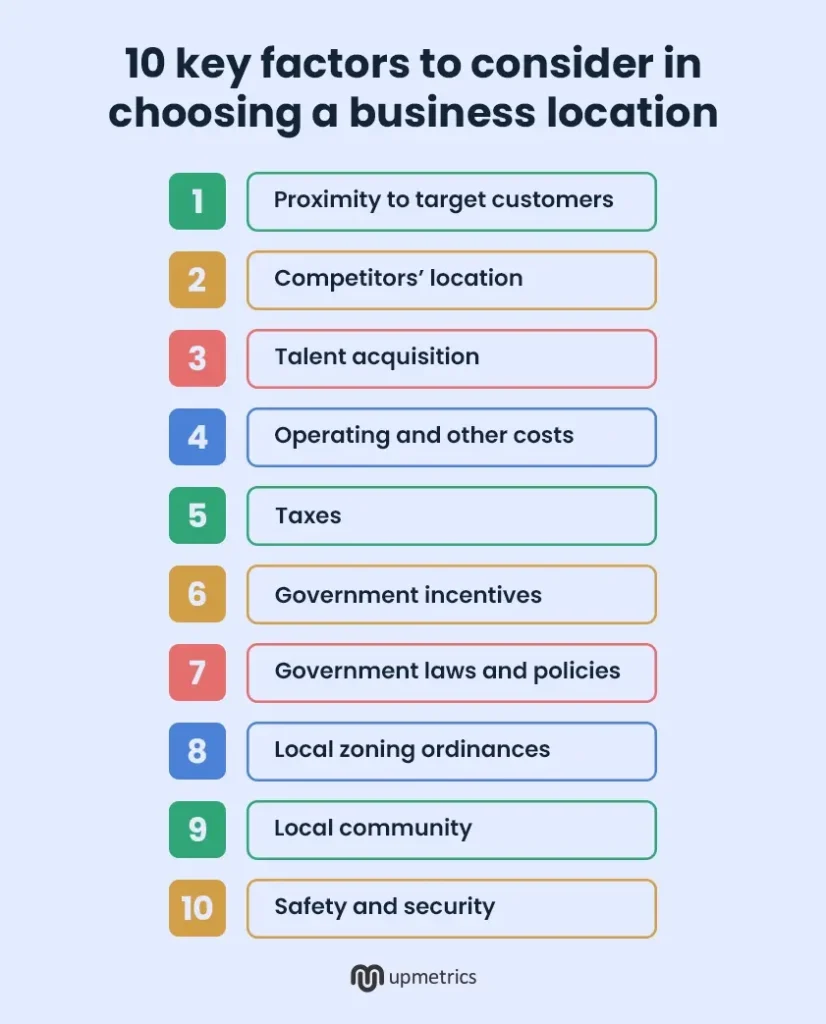
Factors to Consider When Selecting the Right Business Location:
- Accessibility and Visibility: Prioritize accessibility and visibility to draw in foot traffic and improve your business's appeal.
- Local Demographics: Research local demographics to ensure your business can cater to the target market.
- Proximity to Suppliers and Partners: Consider the proximity to suppliers, partners, and other businesses that can support your operations.
- Transportation and Logistics: Assess the transportation options, roads, and logistics infrastructure to ensure smooth operations.
- Employment Costs and Regulations: Research local employment costs, laws, and regulations to ensure they align with your business needs.
- Local Regulations and Zoning Laws: Familiarize yourself with local regulations, zoning laws, and permits required for your business.
- Market Competition and Demand: Analyze market competition and demand to ensure your business can thrive.
- Environmental and Health Concerns: Assess potential environmental and health concerns associated with the location.
- Employee Attraction and Retention: Consider the quality of life, amenities, and attractions in the area to ensure employee satisfaction and retention.
- Future Growth and Expansion: Plan for future growth and expansion by considering the location's potential for development and renewal.
Strategies for Selecting the Right Business Location:
When selecting the right business location, consider the following strategies:
- Conduct Research: Gather data and information about the area, including demographics, market trends, and local regulations.
- Evaluate Multiple Options: Compare different locations based on the factors outlined above to ensure you make an informed decision.
- Consult Experts: Seek advice from commercial real estate brokers, lawyers, and other experts to ensure you navigate the selection process effectively.
- Engage with the Local Community: Build relationships with local residents, businesses, and stakeholders to understand the community's needs and expectations.
- Plan for Flexibility: Consider the possibility of future changes and plan for flexibility to adapt to new opportunities or challenges.
Conclusion:
Choosing the right business location is a critical decision that can significantly impact your business's success. By considering the factors outlined in this guide and implementing the strategies for selecting the right location, you can make an informed decision that supports your business's growth, profitability, and overall success. Remember to prioritize accessibility and visibility, research local demographics, and assess the local market to ensure you find the perfect spot for your business.