New York State LLC Registration: A Step-by-Step Guide
Forming an LLC in New York State can seem daunting, but it's a straightforward process once you break it down into manageable steps. In this article, we will guide you through the New York State LLC registration process, including the required documents, costs, and taxes involved.
Step 1: Choose a Business Name
When forming an LLC in New York State, you'll need to choose a unique business name that complies with the state's naming regulations. This name must be reserved and checked for availability through the New York State Department of State's database. You can reserve your desired business name online or by mail.
Step 2: Select a Registered Agent
A registered agent is a person or entity that will receive official documents and notices on behalf of your LLC. In New York State, the Secretary of State serves as the default registered agent for all LLCs. However, you may choose to appoint a different registered agent, such as a reputable service or an individual who lives in the state.
Step 3: File Articles of Organization
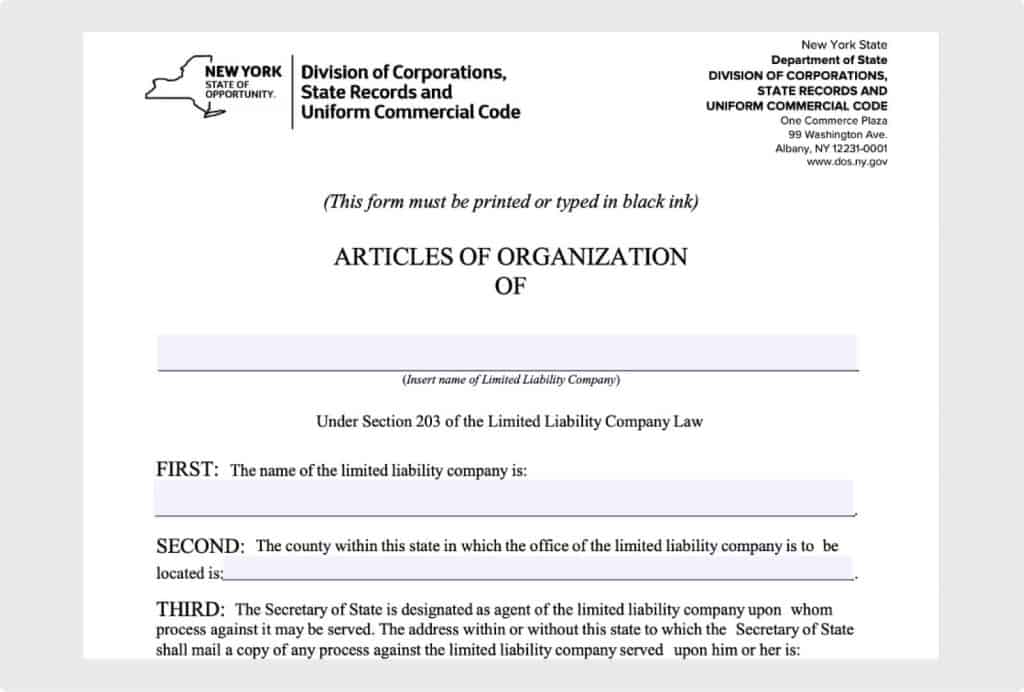
After selecting a business name and registered agent, you'll need to file the Articles of Organization with the New York State Department of State. This document outlines the essential details of your LLC, including the business name, purpose, and ownership structure. You can file online through the New York Business Express portal or by mail.
Step 4: Obtain Any Necessary Licenses and Permits
Depending on the type of business you're operating, you may need to obtain additional licenses and permits from the state and local authorities. These can include sales tax registration, food service permits, and health department permits. Be sure to research the specific requirements for your business and obtain any necessary licenses and permits before commencing operations.
Step 5: Publish a Notice of Formation (Optional)
Within 120 days of filing your Articles of Organization, you may need to publish a notice of formation in a local newspaper to meet the requirements of Section 206 of the New York State Limited Liability Company Law. This is a one-time requirement and can be completed with the help of a professional service or by filing with the Secretary of State.

Step 6: Obtain an EIN (Optional)
An EIN, or Employer Identification Number, is a federal tax identification number assigned to your LLC. While it's not required, obtaining an EIN is recommended to facilitate tax compliance and prevent personal liability. You can apply for an EIN online through the IRS website or by mail.
Step 7: Maintain Compliance
As a registered LLC in New York State, you'll need to maintain compliance with state regulations by filing annual reports and paying any required fees. You'll also need to keep accurate records and adhere to federal and state tax laws.
Costs and Taxes Involved in LLC Registration
The cost of registering an LLC in New York State can range from $250 to $350, depending on the filing method and other requirements. You'll also need to pay annual fees, totaling $25 to $500, for maintaining the LLC. Further tax obligations include a minimum state tax of $25 and a possible franchise tax on the LLC's income.
Conclusion
Registering an LLC in New York State is a relatively straightforward process, requiring several steps, including choosing a business name, selecting a registered agent, and filing essential documents with the state. By following these guidelines and adhering to the necessary regulations, you'll establish a legally compliant business entity and solidify your presence in the New York State business community.
Additional Resources
- New York State Department of State: https://www.dos.ny.gov/
- New York Business Express: https://www.tax.ny.gov/businesses/business-express.htm
- New York State Limited Liability Company Law: https://www.dos.ny.gov/forms/corp/LLC/Limited%20Liability%20Company.pdf
- New York State Tax Department: https://www.tax.ny.gov/index.htm
Forming an LLC in New York State requires attention to detail and adherence to state regulations. By following these guidelines, you'll ensure a smooth and successful registration process, setting the foundation for a compliant and thriving business entity.