Understanding the Epidemic of Attention Span Reduction
Are you finding it increasingly difficult to focus on a task for an extended period without getting sidetracked? If yes, you're not alone. Millions of people around the world are struggling with what's commonly known as attention span reduction. In this article, we'll explore the reasons behind this phenomenon, its effects on our daily lives, and strategies to help you regain your focus and combat attention span reduction.
What is Attention Span Reduction?
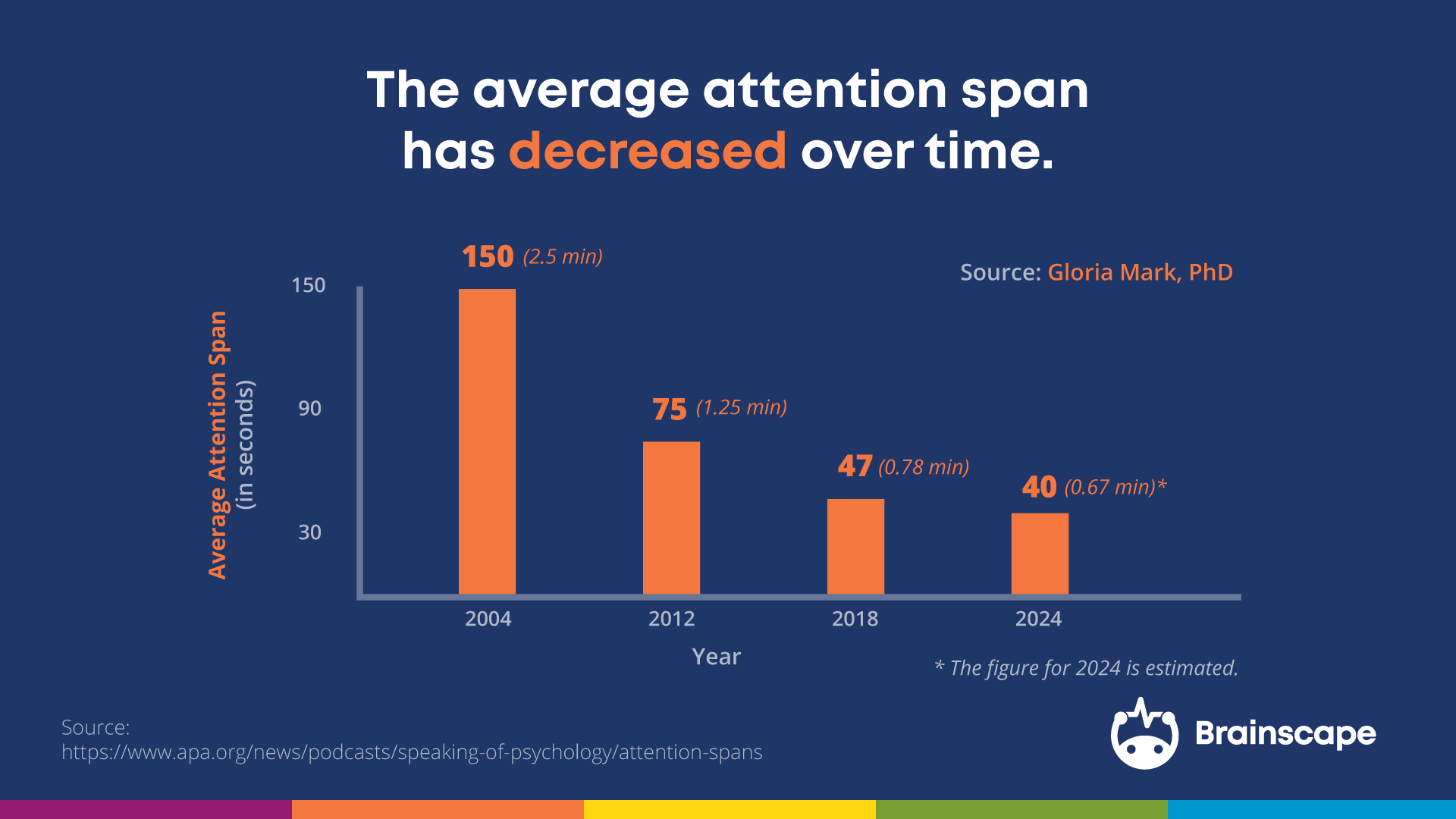
Attention span refers to the amount of time an individual can focus on a task without becoming distracted. It's a complex cognitive process that involves directing and maintaining attention towards a specific stimulus. Various factors influence attention span, including age, experience, motivation, and environmental conditions. However, recent research suggests that the average attention span has been decreasing significantly over the past few decades.
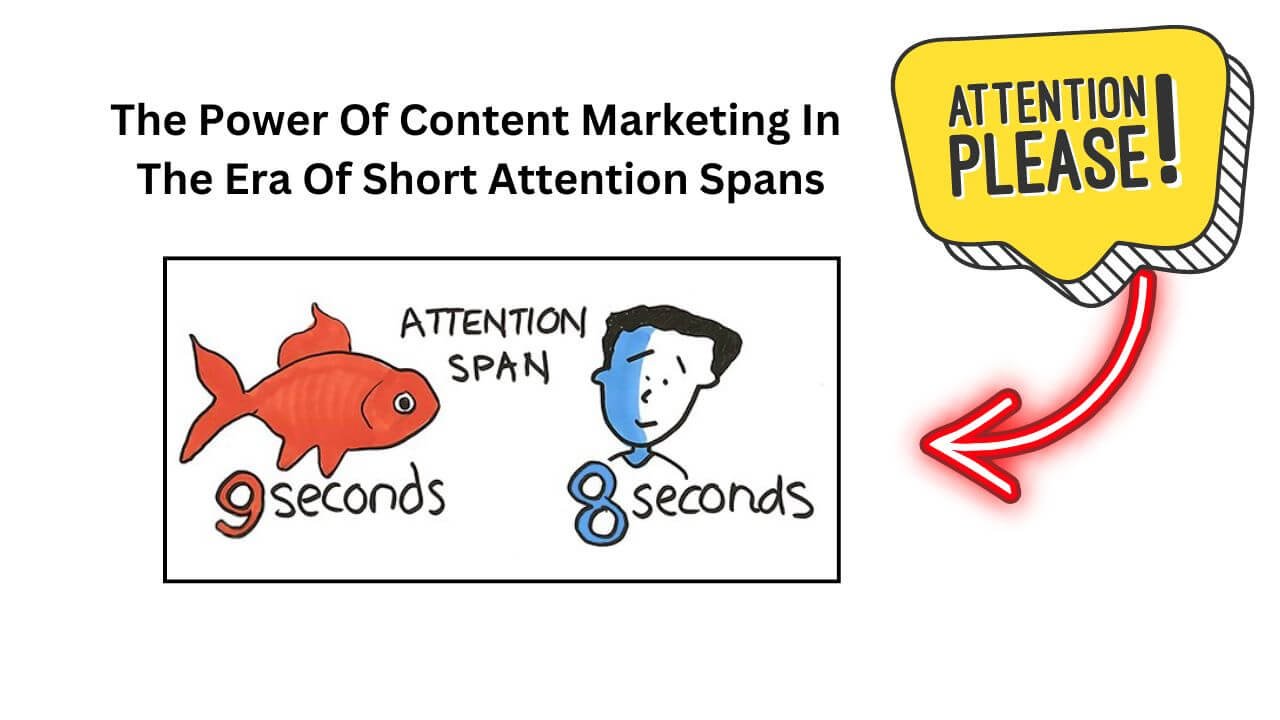
The study led by Microsoft Canada on how technology has affected attention span found that since the year 2000, the average attention span of a person dropped from 12 seconds to 8 seconds. In 2023, a study revealed that our attention spans have decreased by nearly two minutes in the past 20 years, driven in part by technology's hold over our work and home life, experts say.
Why is Attention Span Reduction Happening?
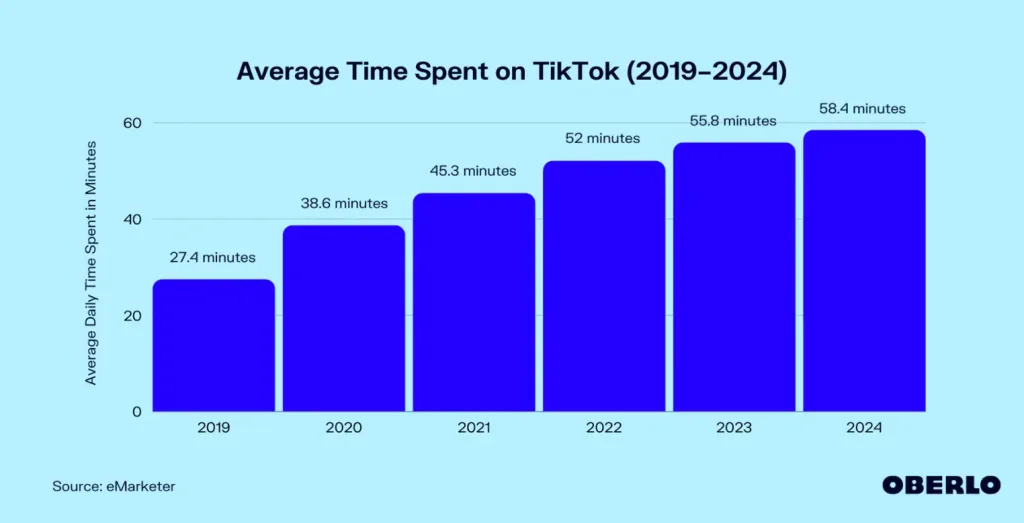
The rise of digital technology and social media has significantly contributed to the decline in attention span. With the constant bombardment of information available to distract us, our brains are constantly adapting to new stimuli, leading to a decrease in the ability to focus. In addition, the increasing use of multitasking and the stress that comes with it have also been identified as major contributors to attention span reduction.
- Multitasking**: Engaging in multiple tasks simultaneously can lead to a decrease in attention span as our brains struggle to keep up with the demands of each task.
- Digital distractions**: The constant notifications, emails, and social media updates can significantly hinder our ability to focus on a task for an extended period.
- Stress and anxiety**: The stress and anxiety associated with modern life can also contribute to attention span reduction as individuals become more easily distracted.
- Decreased face-to-face interactions**: The decline in face-to-face interactions and the rise of technology have led to a decrease in attention span as individuals become more accustomed to consuming information in bite-sized chunks.

Consequences of Attention Span Reduction
The consequences of attention span reduction are far-reaching, affecting various aspects of our lives. Some of the most significant consequences include:
- Reduced productivity**: Difficulty focusing on tasks can lead to a decrease in productivity and efficiency, impacting work and personal lives.
- Poor academic performance**: Students who struggle with attention span reduction may find it challenging to complete assignments, leading to poor academic performance and reduced opportunities.
- Mental health concerns**: The constant stress and anxiety associated with attention span reduction can contribute to mental health concerns such as depression, anxiety, and burnout.
Strategies to Combat Attention Span Reduction
Fortunately, there are several strategies that can help you combat attention span reduction and regain your focus:
- Practice mindfulness**: Regular mindfulness practice can help improve attention span by training the mind to focus on a single task.
- Set clear goals and deadlines**: Breaking down large tasks into smaller, manageable chunks can help improve focus and attention span.
- Minimize digital distractions**: Implementing strategies such as phone-free zones, turning off notifications, and using website blockers can help minimize digital distractions.
- Engage in exercise and physical activity**: Regular physical activity has been shown to improve focus and attention span by promoting brain health.
- Practice time management**: Effective time management skills can help you prioritize tasks and avoid distractions, leading to improved focus and attention span.